
Last updated October 15, 2026
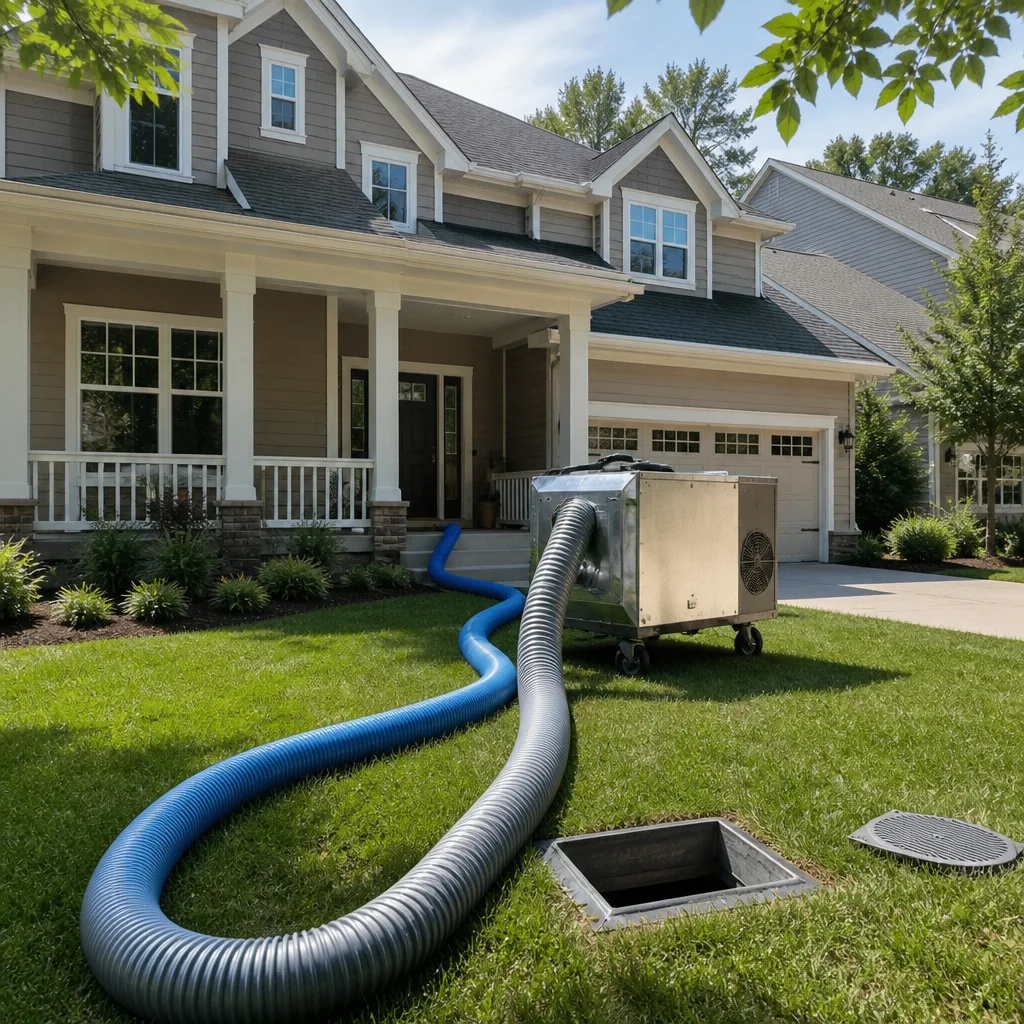 Whole-home duct cleaning
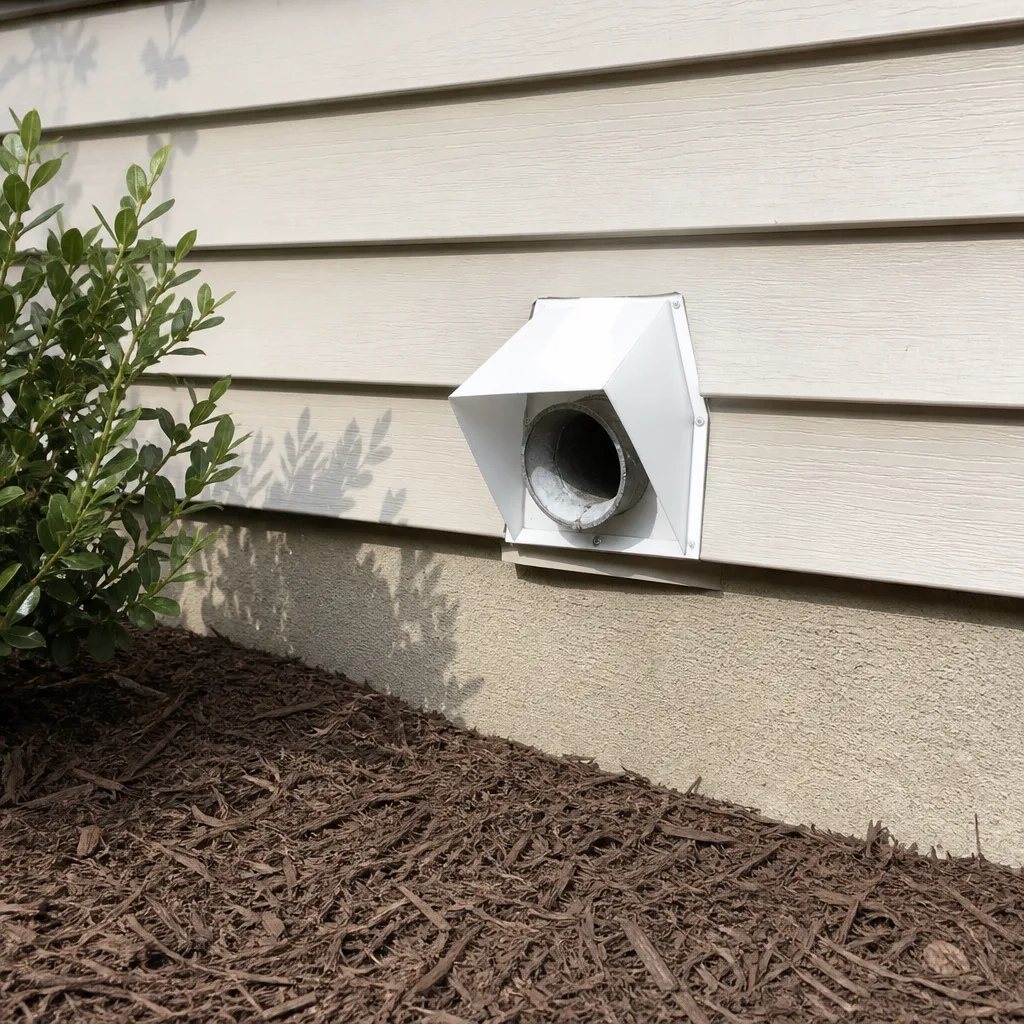 Dryer vent cleaning
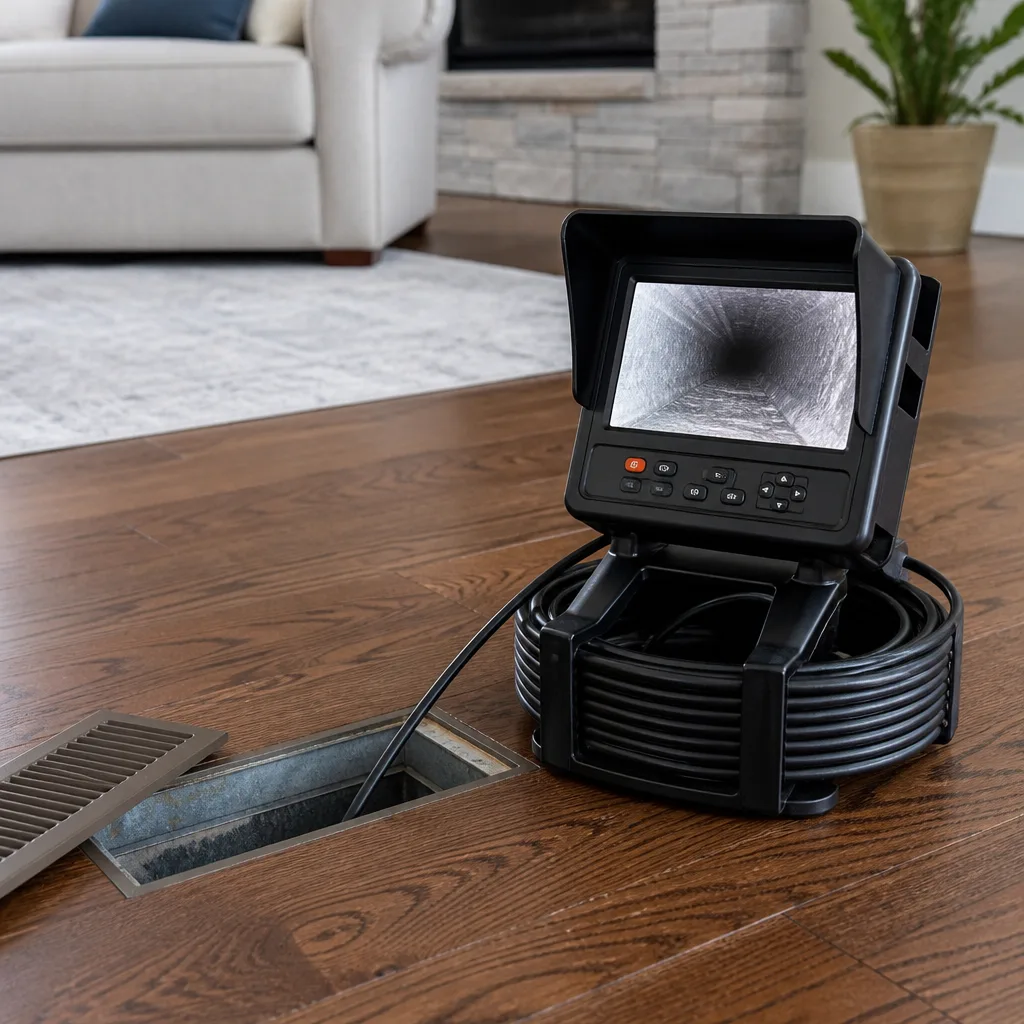 Camera inspection
 Sanitizing & deodorizing
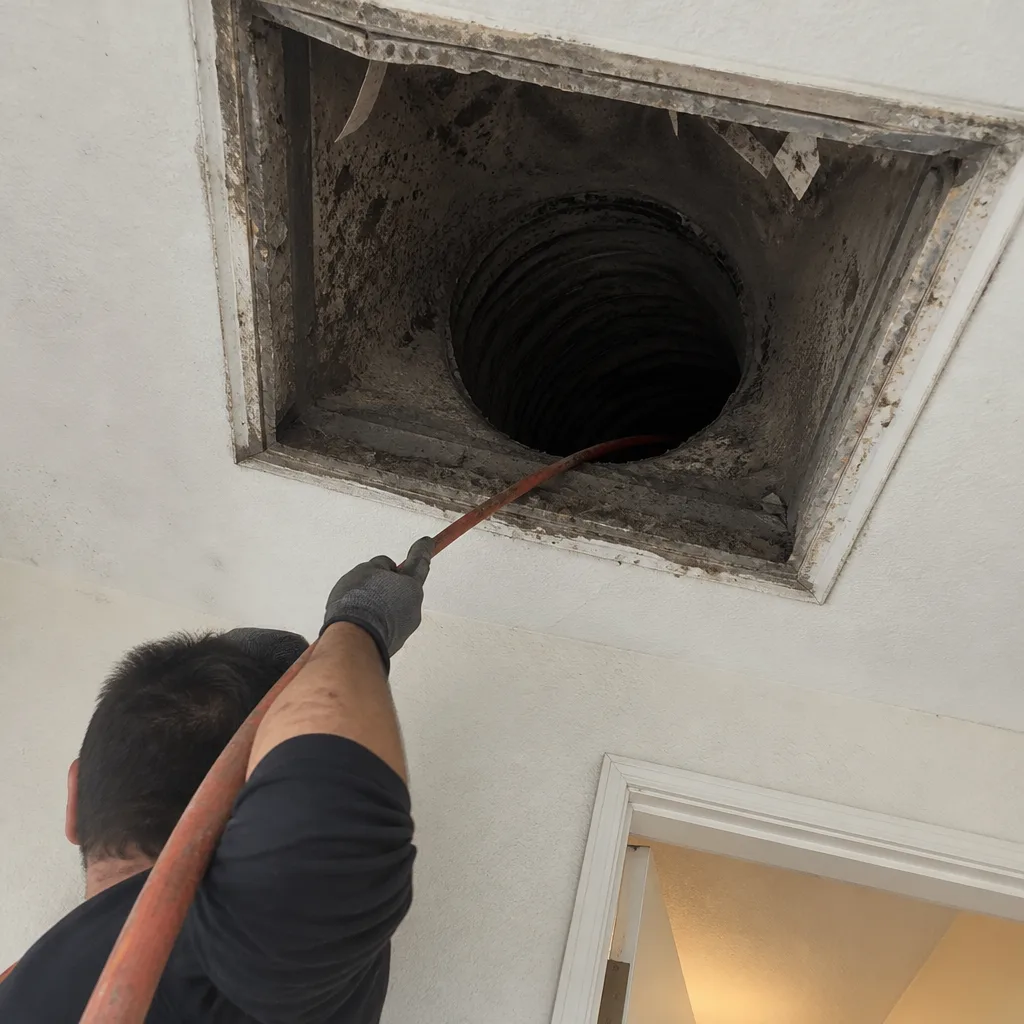
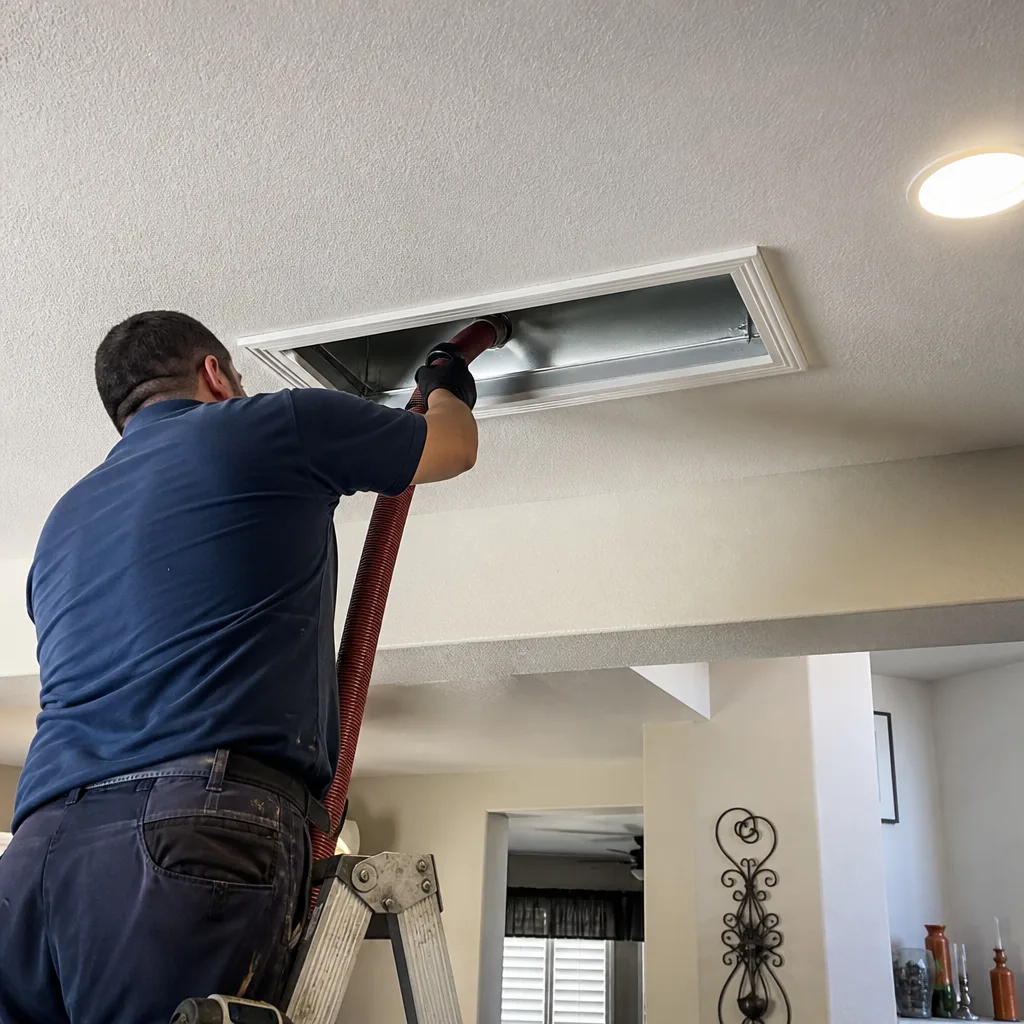
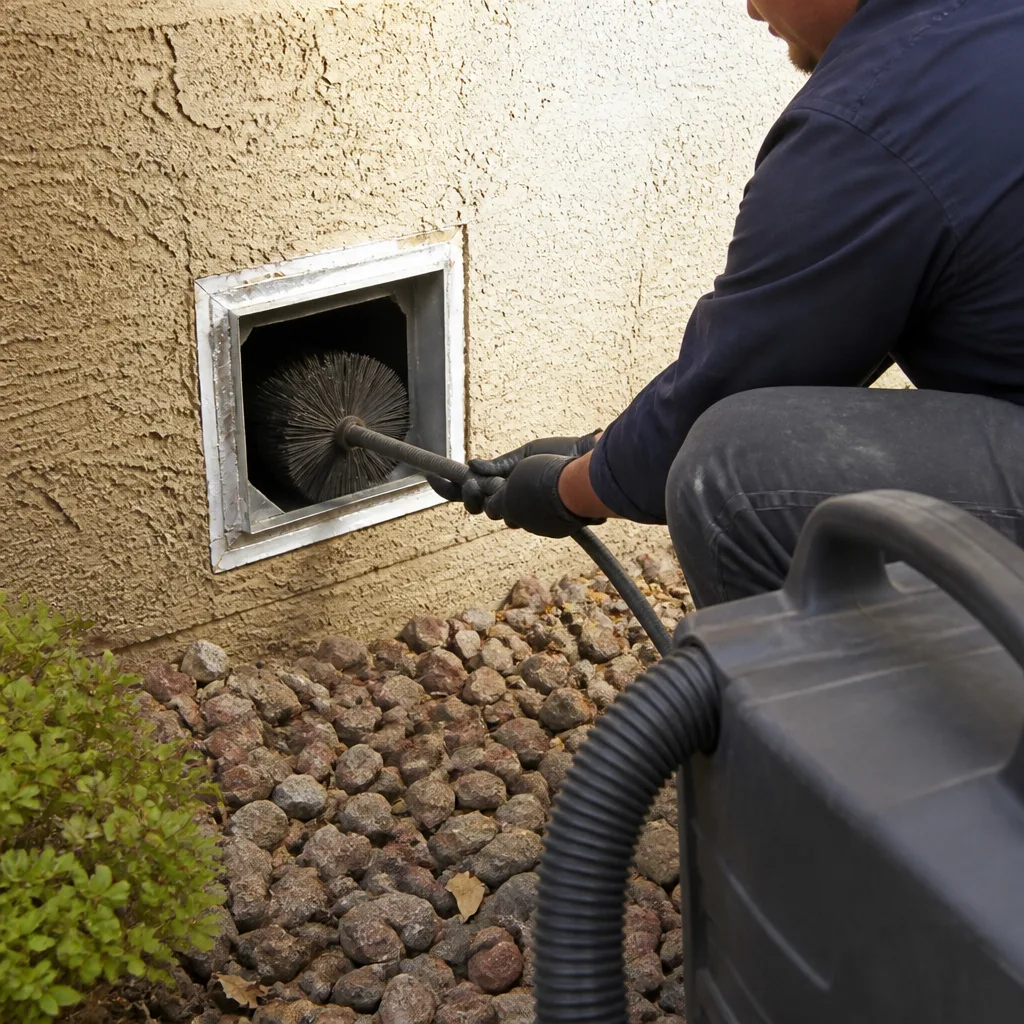
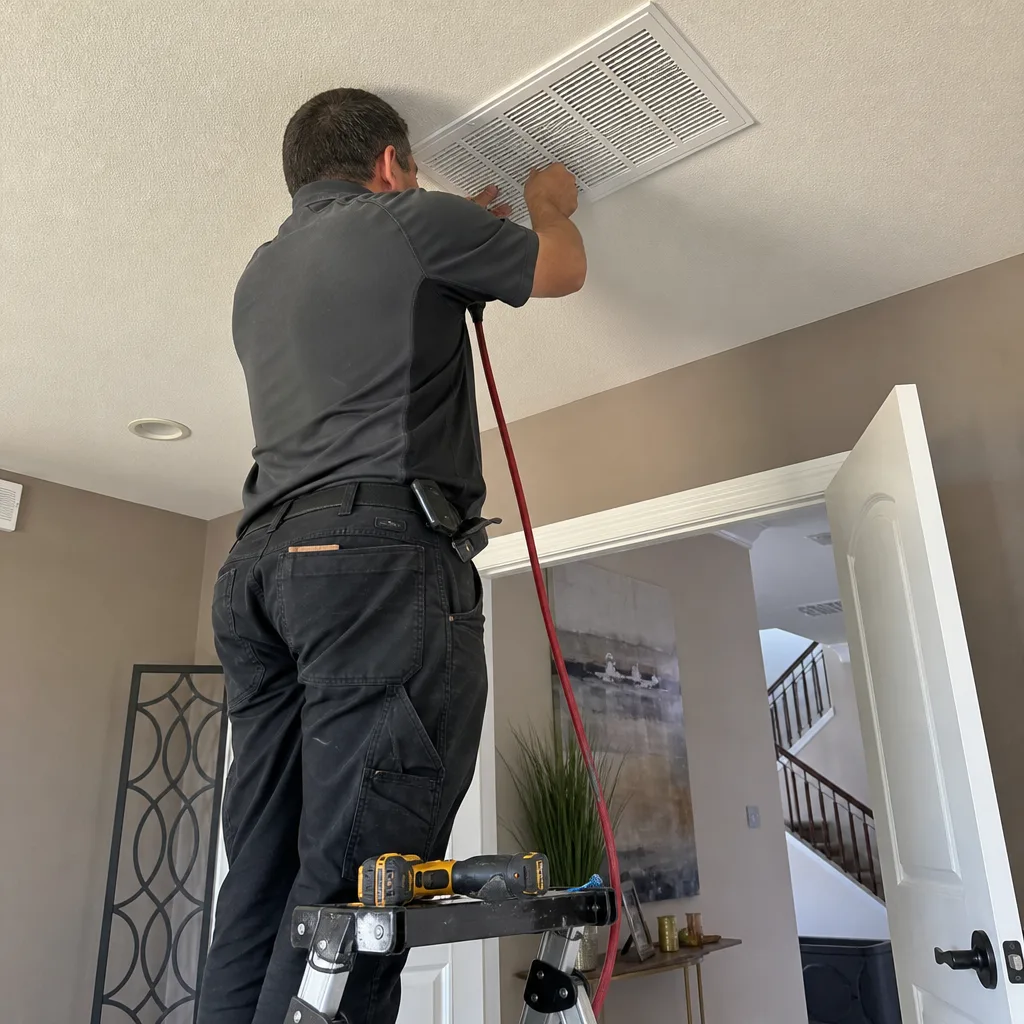
Whole-system duct and dryer vent check with before-and-after photos - you see exactly what came out of your vents
That "$99 whole-house special" is a bait ad - the real number appears once they are in your hallway, or the "clean" is a shop-vac at the register. We photograph the inside of your ducts before and after instead.
Air Duct Cleaning Maintenance Checklist for Henderson Homeowners
The dirtiest thing in most Henderson duct systems isn’t hiding deep inside the ducts. It’s sitting right out in the open: the return air grille that nobody wipes down between cleanings. That grille acts like a funnel. Every time your AC cycles on, it pulls air through a layer of dust, pet hair, and whatever else has settled on it, feeding that straight into your system. Over a full Henderson summer, that grille can pass more particulate into your ductwork than a year of normal household dust. This guide gives you a month-by-month checklist for what to do about it, what to check, and when to leave things alone. It’s written for Henderson homeowners who’d rather spend five minutes a month than three hours with a technician later.
Quick Answer
Air duct maintenance in Henderson comes down to five tasks you can do yourself, on a schedule: change or clean your HVAC filter every 30 to 60 days, wipe down return air grilles monthly during cooling season, vacuum supply registers every other month, inspect the dryer vent and utility room quarterly, and schedule a professional duct cleaning every three to five years. Homes with pets should check the filter every three weeks in summer. The single highest-leverage habit is wiping the return grille monthly during AC months, which keeps the bulk of household dust from entering the system in the first place.
Styles & brands we work with
Table of Contents
- The Filter Is the Front Line
- Return Grilles: The Task Everyone Skips
- Supply Registers and What They Tell You
- The Month-by-Month Henderson Checklist
- Why the Dryer Vent Belongs on the Same Calendar
- Document Your Baseline Before You Need It
- What Professional Cleaning Actually Changes
- Common Mistakes to Avoid
- When to Call a Professional
- Frequently Asked Questions
The Filter Is the Front Line
Everything in your duct system starts at the filter. In Henderson, the filter works harder than it does almost anywhere else because the cooling season runs from April through October, sometimes longer. The HVAC system cycles frequently during those months, which means the filter sees continuous airflow and accumulates dust, pet dander, and fine desert particulate faster than it would in a milder climate.
For Henderson homes with pets, we recommend a MERV 8 to MERV 11 filter. That range captures significant dust and pet dander without restricting airflow. Higher MERV ratings, like MERV 13 and above, sound appealing and they do capture smaller particles. But they also create more resistance. In a typical Henderson home with a standard residential blower, a MERV 13 filter can reduce airflow enough to make the system work harder, especially if the filter has been in place for longer than a few weeks. A slightly dirty high-MERV filter is worse for your system than a moderately dirty MERV 8, because it starts behaving like a clog.
The Henderson rule of thumb is simple:
- No pets, one or two people: check the filter monthly; replace every 60 to 90 days.
- One pet: check every three weeks during summer; replace every 45 to 60 days.
- Two or more pets, or one long-haired pet: check every two to three weeks during cooling season; replace every 30 days. Pet hair and desert dust together will load a filter faster than most homeowners expect.
We also see a pattern in Henderson: homeowners who use the cheapest fiberglass filters, the ones that look like blue web, and leave them for six months. Those filters catch the largest particles but let nearly everything else pass into the evaporator coil and ducts. If you hold a fiberglass filter up to a light and can clearly see through it, that’s what your system is seeing too. A pleated filter in the MERV 8 to 11 range is the better baseline for a Henderson home, especially one with kids and pets.
Return Grilles: The Task Everyone Skips
The return grille is the vent where air enters the system to be heated or cooled. It’s usually larger than the supply registers and often mounted high on a wall in a hallway or living area. It’s also the single most neglected component in most Henderson homes, because it looks unremarkable and nobody thinks about it.
Here’s what actually happens. Air moving into the return grille carries dust with it. Some of that dust passes through. Some of it accumulates on the grille’s louvers and fins. Over time that accumulation thickens. The grille becomes a dust reservoir sitting directly in the airflow path, and every cooling cycle pulls from it. In homes with pets, the buildup is often a mix of fine dust and hair that forms a felt-like layer on the grille’s interior side.
Monthly during the cooling season, wipe the return grille:
- Turn the system off at the thermostat for a few minutes.
- Use a vacuum with a brush attachment to remove loose dust from the grille face.
- Dampen a microfiber cloth with warm water, wring it nearly dry, and wipe each louver. For grilles in kitchens or near bathrooms, a single drop of mild dish soap in the water helps cut the slight film that forms from cooking oils and humidity.
- Check the filter behind the grille while you’re there. Many Henderson homes have the filter mounted at the return, and the grille wipe is a natural time to look at it.
- Let the grille dry, then turn the system back on.
This takes under five minutes. It’s the highest-leverage maintenance task on this entire page because it stops dust before it enters the ducts, not after. We’ve cleaned Henderson systems where the return grille had a visible fur of dust but the ducts behind it were relatively clean. The homeowner was replacing a filter regularly and doing nothing else, and the grille became the problem. Wipe it monthly during cooling season and you’ll see a visible difference in how quickly the filter loads.
Supply Registers and What They Tell You
Supply registers are the vents where conditioned air enters rooms. They tell you more about your system than almost any other visible component, and reading them is a maintenance habit that takes less than 10 minutes every couple of months.
Start with what you can see without removing anything. Dust streaks on the wall or ceiling near a register indicate air is escaping around the register instead of flowing through it, often a sign the register boot isn’t sealed well to the drywall. Discolored or darkened areas around a register in a room that’s rarely used can point to fine particulate accumulation from the air stream. Registers that rattle or vibrate while the system runs may be loose, and a loose register lets unfiltered attic or wall cavity air get pulled into the conditioned room, especially on the return path.
Twice a year, do a walk-through:
- Walk the house during a cooling cycle and hold a tissue or single square of toilet paper near each supply register. If it flutters, the register is getting airflow.
- Note any rooms where the tissue doesn’t move. Before calling anyone, check that the register’s internal damper, if it has one, isn’t closed. This is more common than homeowners realize and it’s the cheapest fix there is.
- Vacuum the register face with a brush attachment. If you’re comfortable lifting the register, which most simply lift out, vacuum the visible portion of the boot underneath and wipe the register itself with a damp cloth. This is optional, but it’s how you keep register dust from becoming duct dust.
- Put the register back so it sits flush. No need to force anything; if it doesn’t seat, it’s worth noting for a future service visit.
Henderson homes with ceiling registers in rooms that face the afternoon sun often see more discoloration around those registers. It’s not necessarily a duct problem; that’s the hottest wall in the house and the air stream picks up heat as it moves through the attic. But accumulated fine dust on the register itself makes the discoloration worse and it’s easily removable with the same monthly wiping routine as the return grille.
The Month-by-Month Henderson Checklist
Henderson’s maintenance calendar doesn’t look like the rest of the country’s. We don’t have a real heating season, and the cooling season is long. Here’s a month-by-month schedule built around what the Henderson climate actually does, broken into tasks that take 5 minutes, 30 minutes, and the once-per-season jobs.
January and February
The system runs less even by Henderson standards. Use these months for the once-a-year inspection tasks.
- 30 minutes: inspect every register in the house. Look at the walls and ceilings around them for dust streaking, check airflow with the tissue test, and vacuum each register face. Pay attention to bedrooms that have been closed up; closed doors change the pressure balance in a house and can make return airflow work harder.
- 30 minutes: inspect the dryer vent run from the back of the dryer to where it exits the house. You’re looking for a crushed or kinked transition hose, buildup where the hose meets the wall, and debris at the exterior vent cap. This is also a good time to confirm the exterior cap’s flap opens when the dryer runs.
- 5 minutes: while the system isn’t running heavily, note the current state of your air filter. If you’re on a 60-day replacement schedule, February is a buffer month; go ahead and start fresh for the cooling season.
March through May
Cooling season begins in earnest. Henderson hits its first stretch of 90-degree days, and the system transitions from intermittent to daily cycling.
- 5 minutes weekly: check the filter in homes with pets. Dust and dander load accelerates as soon as the system starts running daily.
- 5 minutes monthly: wipe the return grilles.
- 30 minutes once: clean or replace the filter before the first sustained heat wave. Starting cooling season with a fresh filter is the simplest preventative step there is.
- Also in May: check condenser coils outside. Trim any vegetation growing within two feet of the outdoor unit. Don’t open the unit; just confirm nothing is blocking airflow. A clean filter inside doesn’t help much if the outdoor unit is pulling through a hedge.
June through September
Peak load. The AC runs daily and often runs all afternoon and evening. This is the season when neglected duct maintenance shows up as higher bills and uneven room temperatures.
- 5 minutes monthly, and twice monthly if you have pets: wipe the return grille and vacuum any visible accumulation on the filter face. Don’t vacuum a pleated filter aggressively; a soft brush pass to remove pet hair is enough.
- 5 minutes monthly: check the filter. If it looks loaded, replace it regardless of schedule.
- 30 minutes once, around late July: do a quick register walk-through. After eight weeks of continuous cooling, rooms with weak airflow will be obvious. The fix is sometimes as simple as a partially closed register damper, but knowing which rooms underperform gives you useful information if you later call a professional.
- Also: if you run ceiling fans, clean the fan blades. This is genuinely part of a duct maintenance mindset; fan dust becomes airborne and increases the overall particulate load the system has to handle.
October through December
The system finally gets a break. Use these months for the annual dryer vent check and the deeper once-a-year tasks.
- 30 minutes once: pull the dryer away from the wall, disconnect the transition hose, and look inside. Lint accumulates in the hose and at the wall connection even if the exterior vent looks clear. If it’s been more than two years since a professional dryer vent cleaning, this is the season to schedule one before holiday laundry starts.
- 5 minutes monthly: wipe the return grille even though the system isn’t cooling. The grille still collects dust, and deep-cleaning it in October means less work in March when cooling season starts again.
- Once: replace any filter you’ve been stretching, so the system sits through winter with a clean filter. A fresh filter in December keeps dust from settling back into the system during the low-use period.
Why the Dryer Vent Belongs on the Same Calendar
Duct cleaning and dryer vent cleaning are usually sold as two separate services, and they are. But they belong on the same maintenance calendar for one simple reason: they share the same consequence of neglect, which is that buildup accumulates quietly until it restricts airflow, efficiency drops, and a serious problem becomes much more likely.
In Henderson, dryer vents face a particular challenge. Our air is dry most of the year, which sounds like it should mean less lint. Dry air actually makes lint lighter and more likely to suspend in the air stream. A vent run that goes through an unconditioned garage or up an exterior wall will collect a fine, dense layer of lint that compacts over time. We see Henderson vents that look clear at the exterior cap but are reduced to a small fraction of their original diameter inside the run.
The check takes five minutes every few months:
- Run the dryer on a no-heat cycle and go outside to the vent cap. The flap should open and you should feel a steady stream of air. Not a weak puff, a stream.
- If the flap barely moves, or you don’t feel much air, the vent is restricting.
- Check the exterior cap for lint buildup around the flap edges. A fuzzy ring around the edges is a sign the vent is beginning to exhaust lint through the cap rather than out of it.
- Inside, confirm the transition hose behind the dryer isn’t crushed or kinked. This is more common than most people think, and it fully mimics the symptoms of a clogged vent.
Schedule a professional Dryer Vent Cleaning in Henderson every two years as a baseline, and more often if you do a lot of laundry with pets in the house. The two-year rhythm works for most households. If the vent run is long, say over 15 feet, or if it runs through an attic or crawl space, annual cleaning is the safer bet.
Document Your Baseline Before You Need It
The most useful maintenance tool in Henderson isn’t something you buy. It’s a short written record of what your system looks and sounds like right now, while it’s healthy. Most homeowners only start paying attention when something goes wrong, and that’s the worst possible moment to form a baseline.
Spend 20 minutes creating a one-page home record. It doesn’t need to be formal. A note on your phone works. Include:
- Filter size and type: write down the exact dimensions printed on the filter frame, the MERV rating you use, and the date you installed the current one.
- Filter location: is it at the return grille, at the air handler, or both? Henderson homes vary. Knowing this before a phone call saves time.
- System location: where is the air handler or furnace? Garage, closet, attic? If it’s in the attic, note the access point.
- Register count: a simple number, like “14 supply registers, 2 returns.”
- Year of last professional cleaning: if you don’t know, write “unknown.” Most people don’t know, and that’s valuable information too.
- Any persistent issues: a room that’s always warmer, a register that whistles, a smell that comes and goes. Write it down now, not later.
When a technician visits, whether it’s Morton’s or another reputable company, this record lets you have an informed conversation instead of a one-sided one. You can say “the filter is here, it’s MERV 8, and the system has 14 registers.” A homeowner who can describe their system in 30 seconds tends to get a more useful service visit, because the technician can spend less time orienting and more time cleaning. We’ve seen Henderson homeowners hand over a note like this and immediately have a better conversation about what their system does and doesn’t need. The record also protects you from being sold services you don’t need, because you know when the last cleaning actually happened and how your system has been performing.
If you’ve never had your ducts cleaned professionally and the house is older than five years, put “likely due” on that line and call to find out what a cleaning involves and what it costs before committing to it. More on Air Duct Cleaning in Henderson is available on our service page, including the written-price-before-work-starts guarantee.
What Professional Cleaning Actually Changes
There’s a reasonable question underneath all of this: if I’m maintaining my filter and wiping my grilles, do I still need professional cleaning? Yes, but the maintenance you do determines how often you need it and how long it takes.
Professional duct cleaning reaches the surfaces you cannot see or touch from inside the living space: the interior of the supply and return duct runs, the plenums, the evaporator coil in some cases, and the blower compartment. A professional clean uses equipment built for the job, tools like Rotobrush and Nikro systems that agitate and extract dust from the full duct interior without scattering it through the house. That’s the critical difference from a DIY shop-vac attempt. A shop vacuum cannot reach into a duct run, and an improvised attempt tends to loosen more dust than it removes.
What a professional clean changes, based on what we see in Henderson homes:
- Volume of dust landing on furniture: after a professional clean, the system stops redistributing years of accumulated dust through the supply registers. Homes with pets notice this most within the first week.
- Time between filter changes: a filter in a clean system lasts longer because the system isn’t passing dust back through the return side.
- Airflow to weak rooms: if the underperforming room’s issue is a clogged or partially blocked duct run, cleaning can restore airflow without any other repair.
- The baseline you document: after a professional clean, your home record resets. You know the system is clean, and future maintenance has a clear starting point.
Our equipment list includes Guardsman, Rotobrush, Nikro, and Honeywell tools, all professional-grade. We mention this because the equipment matters specifically for the result: agitating years of compacted dust out of a duct run needs more than suction alone. It needs a mechanical brush or agitation tool that can reach the full surface, and extraction that captures what it loosens. That’s the practical difference between a professional Air Duct Cleaning and a maintenance routine, and it’s why the homeowner routine in this guide is about extending time between professional visits, not replacing them.
Common Mistakes to Avoid
- Using a high-MERV filter on an older system without checking airflow. MERV 13 filters are not the right choice for every Henderson home. On a system with an older or mid-range blower, a high-resistance filter can reduce airflow enough to shorten compressor life. MERV 8 to 11 is the safer band for most homes with pets.
- Closing registers in unused rooms. It’s a natural instinct, but closing too many supply registers increases static pressure in the system, which forces the blower to work harder and can pull unfiltered air in through small gaps in the return path. If you want to balance rooms, adjust slightly, don’t close fully.
- Replacing the filter on a fixed 90-day schedule when the system is running daily. In Henderson, “90 days from today” during cooling season can easily be double the actual load of a mild fall period. Check monthly and let what you see determine the replacement, especially in pet homes.
- Ignoring the return grille. This guide has mentioned it repeatedly because it’s the single most overlooked maintenance point and the single most productive five minutes. A dusty return grille puts dust into the system continuously, even with a clean filter.
- Vacuuming the exterior of registers but never wiping them with a damp cloth. The dry-weather dust in Henderson doesn’t vacuum off completely; a damp wipe removes what vacuuming leaves behind. The visible difference is immediate.
- Forgetting the dryer vent is a duct too. It carries more concentrated flammable material than any HVAC duct, and in a dry climate like Henderson, built-up lint is a fire hazard. Put it on the same calendar.
- Relying on a “duct cleaning” coupon without knowing what the company will actually do. In the duct cleaning industry, a low coupon price is often the entry point for a much larger invoice once the technician is on site. This is exactly why written-before-work pricing matters, and exactly why a homeowner should ask what the total system price is before booking.
When to Call a Professional
Most of what’s on this checklist is DIY, but there are clear lines where you should stop and call someone. If you see visible dust or debris on the supply registers themselves that returns within a week of cleaning, the system is likely pushing accumulated duct dust into the rooms. If the filter is loading far faster than it should, meaning weekly instead of monthly, there’s a significant dust reservoir in the system or a return-side leak pulling unfiltered air in. If one room in the house never reaches the same temperature as the others, and register checks don’t explain it, the duct run to that room may be partially blocked or disconnected. If the dryer vent cap shows heavy lint buildup, or clothes are taking noticeably longer to dry, the vent needs professional attention before it becomes a safety issue. Mortons Air Duct Henderson offers free estimates in Henderson, and you can Mortons Air Duct Henderson home page for service details. Call (775) 252-8615 and we’ll give you a written price before any work begins.
Frequently Asked Questions
Every three to five years is the reasonable range for most Henderson homes, with pet households leaning closer to three years and single-occupant no-pet homes leaning closer to five. The three-to-five-year range accounts for our long cooling season, which puts more hours on the system annually than homes in cooler climates. If you don’t know when your ducts were last cleaned and the house is over five years old, you’re likely at or past the interval. Call (775) 252-8615 for a free estimate and a written price.
MERV 8 to MERV 11 is the right range for a Henderson home with pets. MERV 8 catches pet hair and larger dust particles while keeping airflow resistance low. MERV 11 captures smaller dander particles and works well if your blower handles it without strain. Avoid MERV 13 and above unless a contractor has confirmed your system is designed for that resistance level. In our experience, the best results in pet homes come from a pleated MERV 8 to 11 filter replaced every 30 to 60 days, not from a higher rating left in place longer.
Henderson’s dry desert air keeps fine dust airborne longer, which means the system pulls more particulate through the return and loads the filter more quickly than in humid climates. Add a pet and daily cooling cycles from April through October, and a filter that would last 90 days elsewhere can load in 30 days here. Fast filter loading is also sometimes a sign of a return-side leak pulling unfiltered attic or garage air into the system. If your filter is loading weekly, call (775) 252-8615 to have it looked at.
You can maintain the visible access points, the filters, grilles, and registers, which genuinely extends the life of a professional cleaning. You cannot clean the interior of a duct run with household tools. A shop vacuum cannot reach beyond a few inches into a duct, and attempting it tends to loosen dust you can’t capture. Leave the interior cleaning to professionals with equipment like Rotobrush and Nikro systems that agitate and extract dust from the full duct run. The maintenance tasks in this guide are about what you can safely and effectively do yourself; the interior of the ducts is not on that list.
Ask for before-and-after photos of the duct interior, specifically the supply plenum and a mid-point of the main trunk line. A reputable company will provide them because they prove the work. We provide a photo of the clean-up before the crew leaves, so you can see the registers, grilles, and work areas are clean. The 365-Day Done Right Promise means if it’s not done right, we make it right, no argument and no fine print.
The 365-Day Done Right Promise applies to professional cleaning visits. If the job isn’t done right, we make it right within 365 days of the service. For a maintenance routine, that promise matters because it means the professional cleaning you do schedule is backed for a full year, not just for the day the crew leaves. Call (775) 252-8615 to ask about pricing, and we’ll give you a written number before any work starts.
The Bottom Line
Air duct maintenance in Henderson succeeds or fails on the small, repeated tasks, not the annual deep clean. A filter checked monthly, a return grille wiped down during cooling season, a dryer vent inspected twice a year, and a simple written baseline of your system will do more for your home’s air than most people accomplish with any single service visit. The professional cleaning matters, and every three to five years is the right interval for most Henderson homes. For related reading, see our more guides & resources. But the cleanings work best on a system that’s been maintained in between. The cheapest thing on this entire page is a damp microfiber cloth. The most expensive is ignoring the grille that feeds the system. Spend five minutes a month, write down what you see, and call (775) 252-8615 when the work is beyond what you can reach.
Written by Paul Adeyemi, Owner at Mortons Air Duct Henderson, serving Henderson since 2005.
See the difference
 Before
 After
After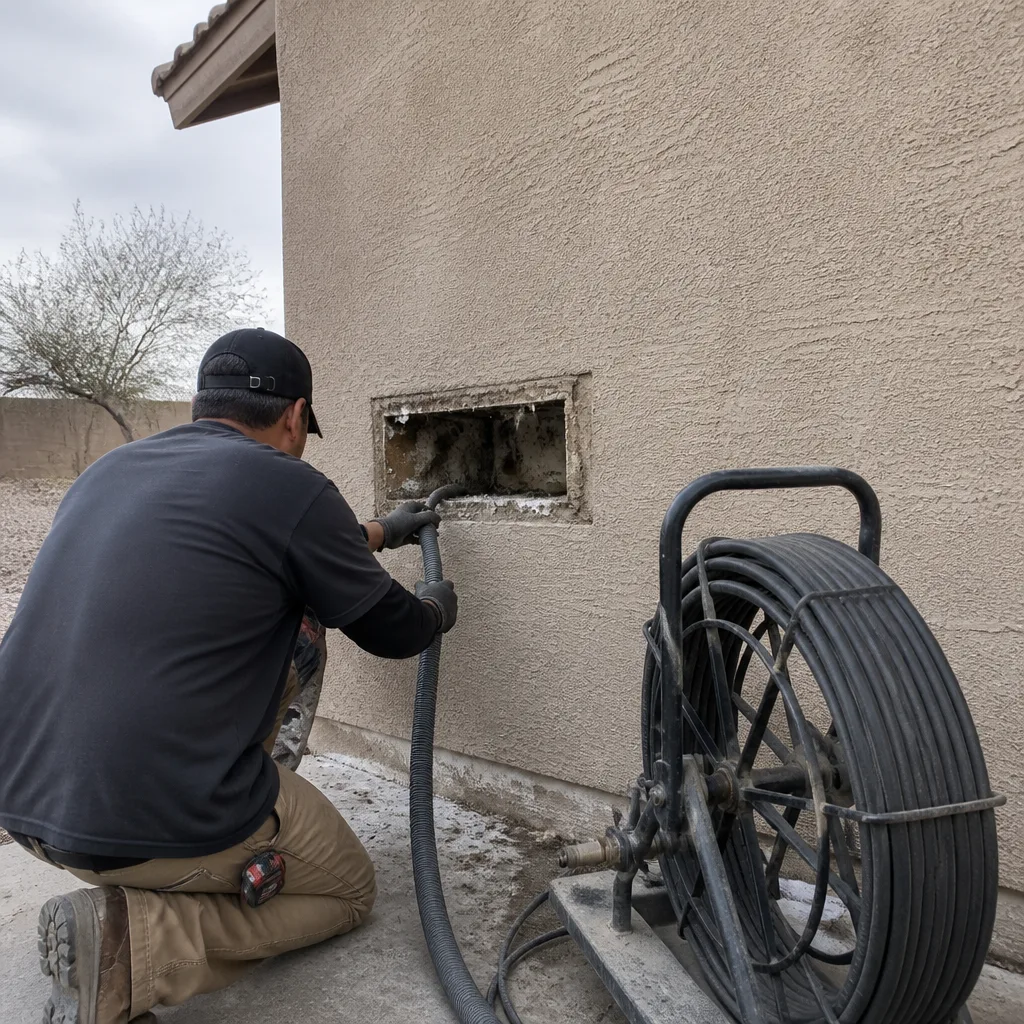 Before
 After
After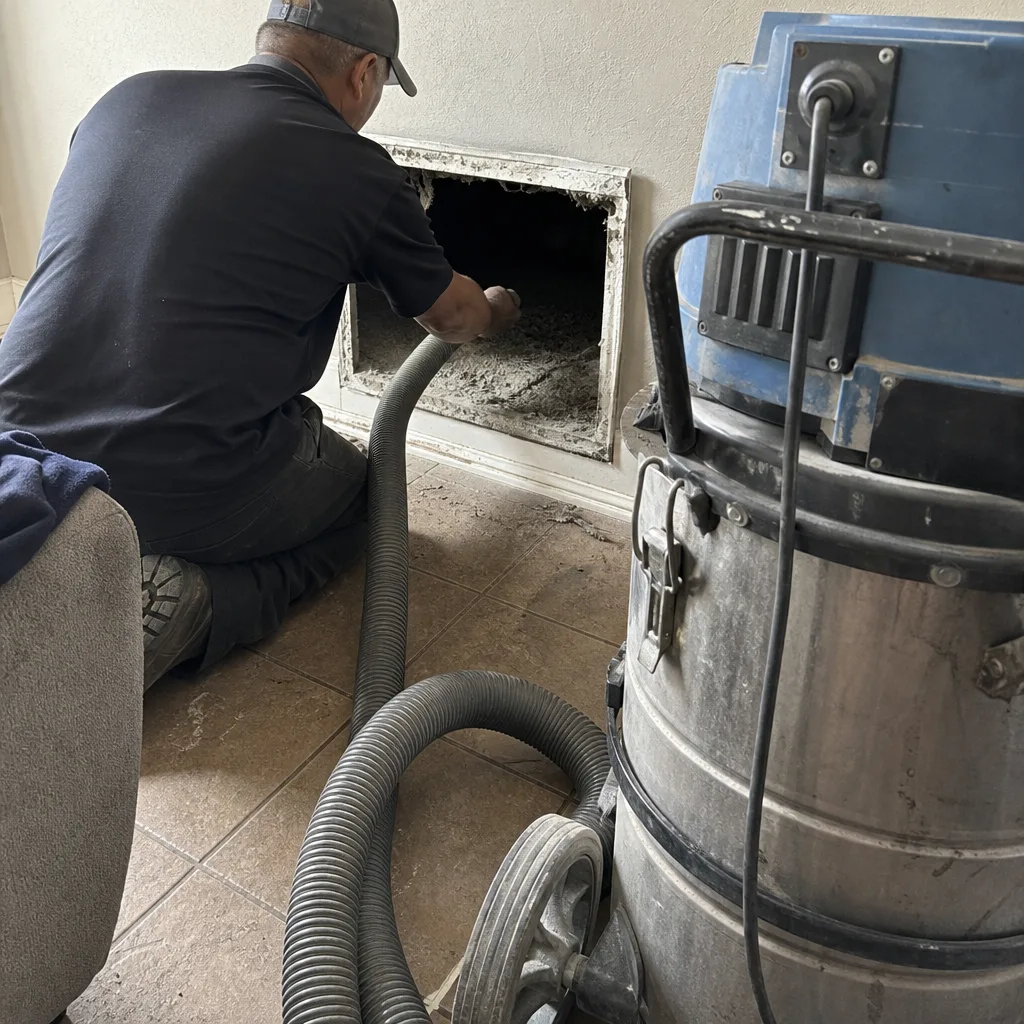 Before
 After
After