
Last updated October 15, 2026
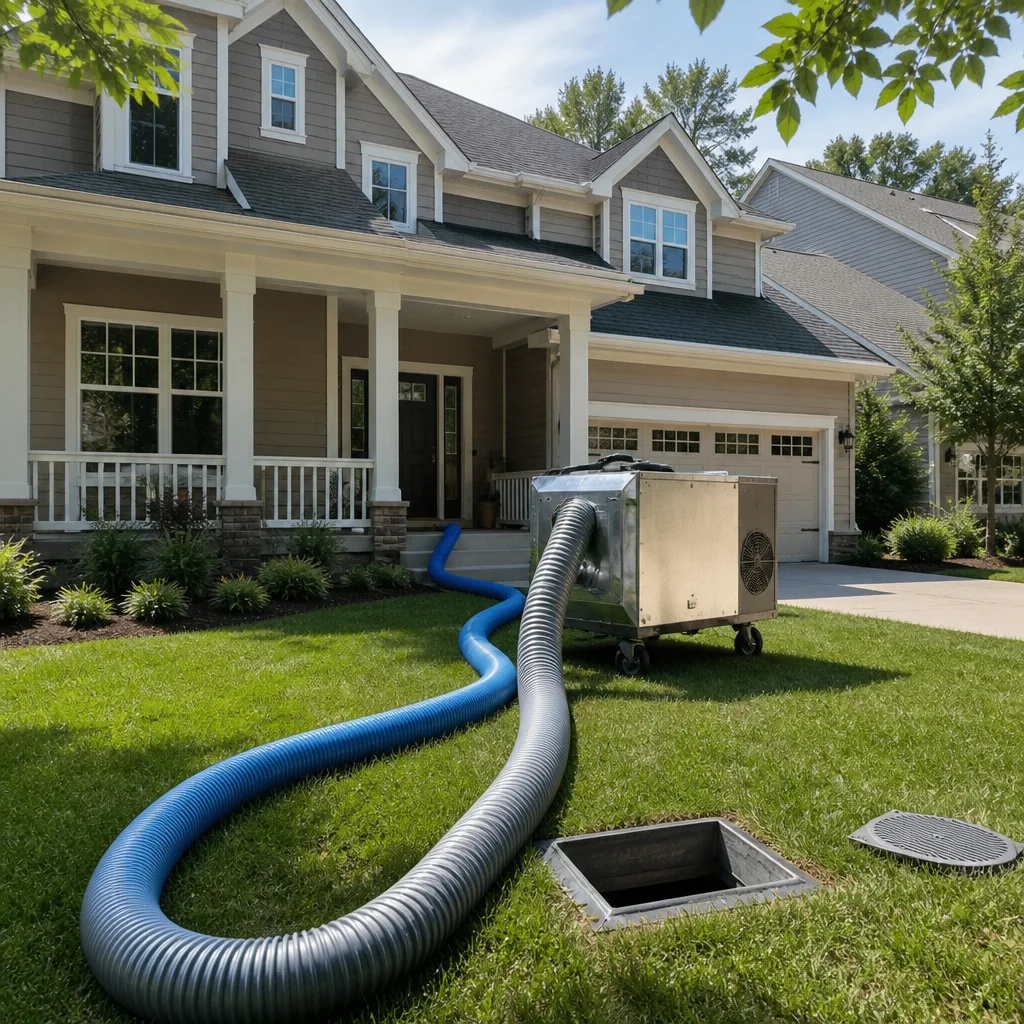 Whole-home duct cleaning
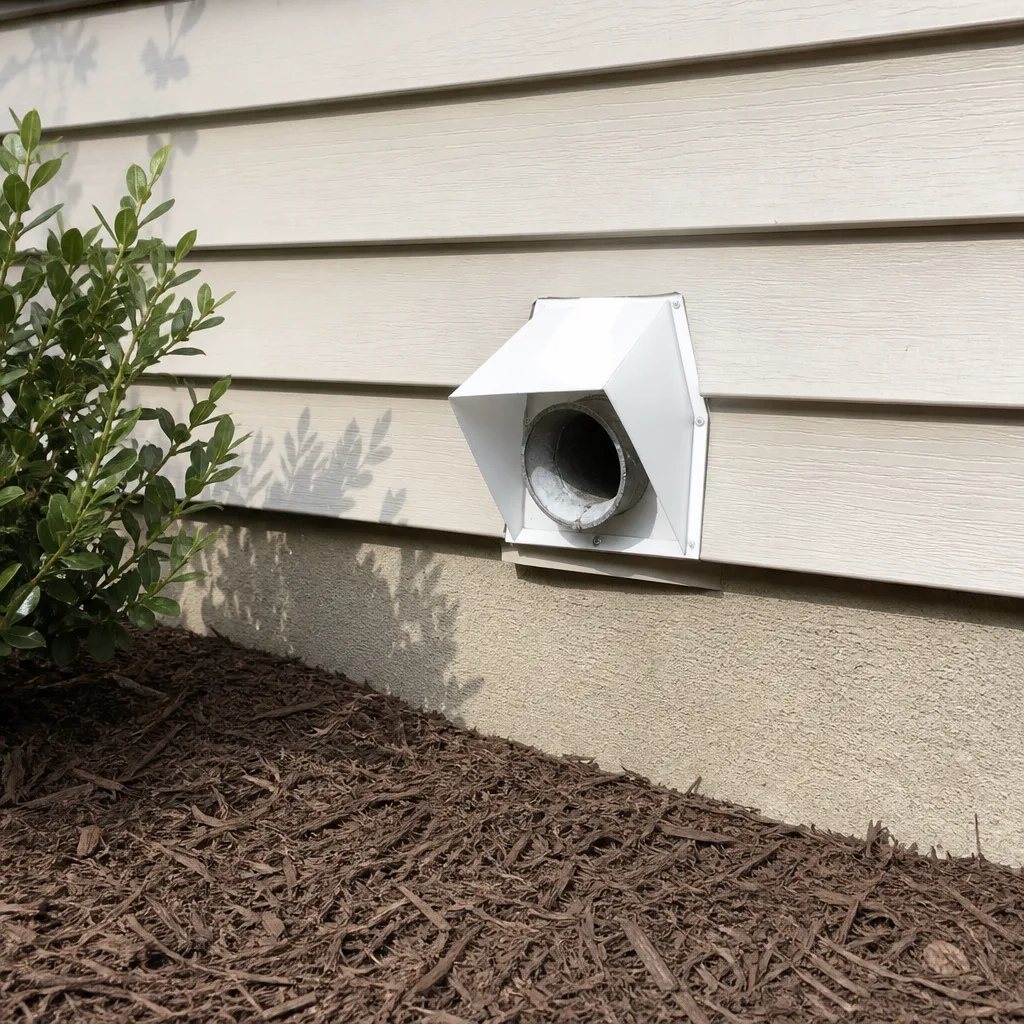 Dryer vent cleaning
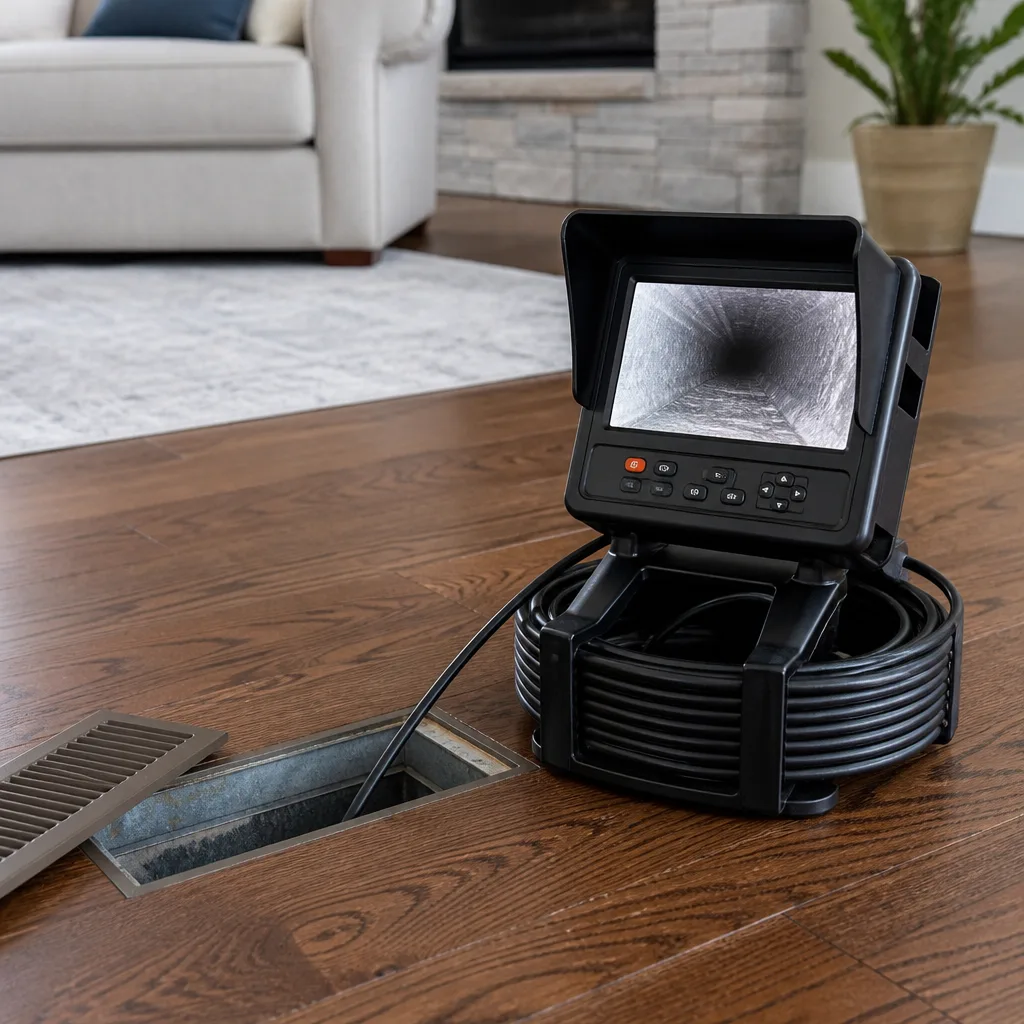 Camera inspection
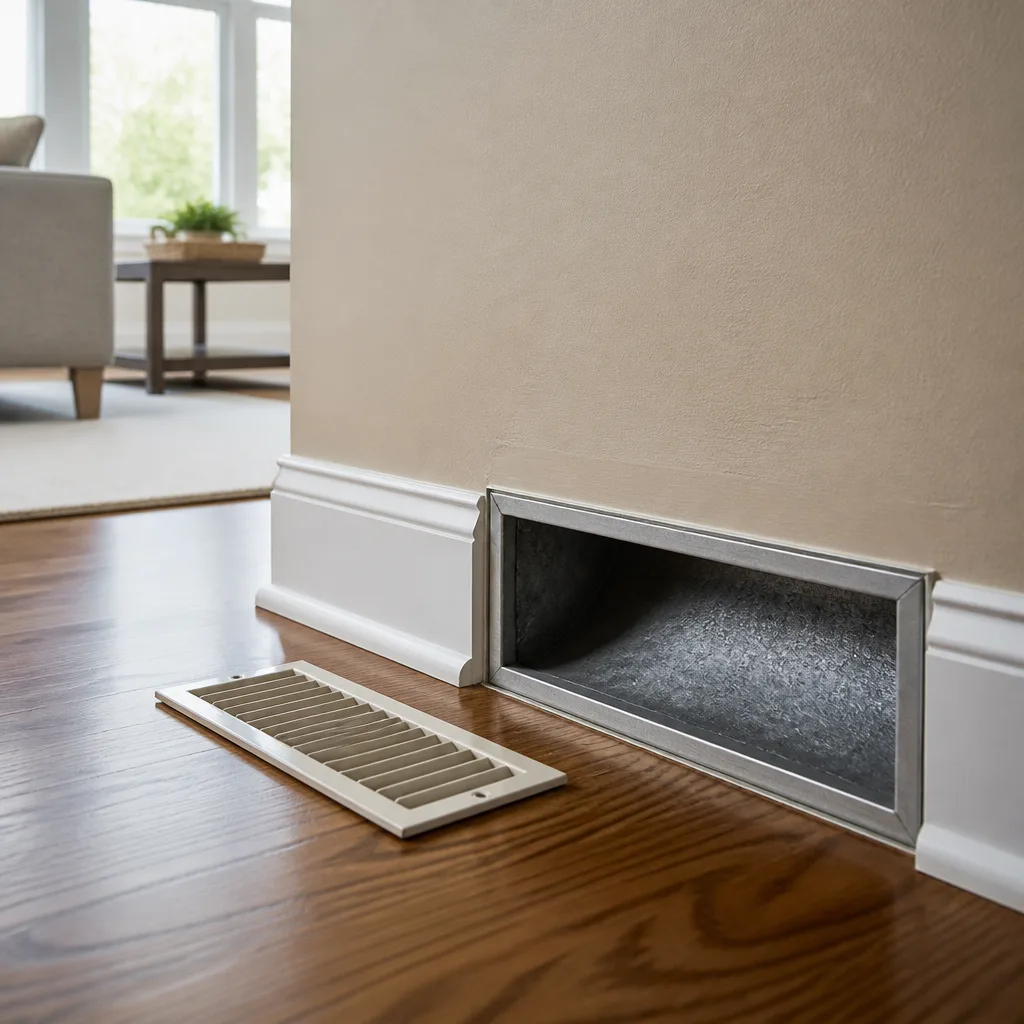 Sanitizing & deodorizing
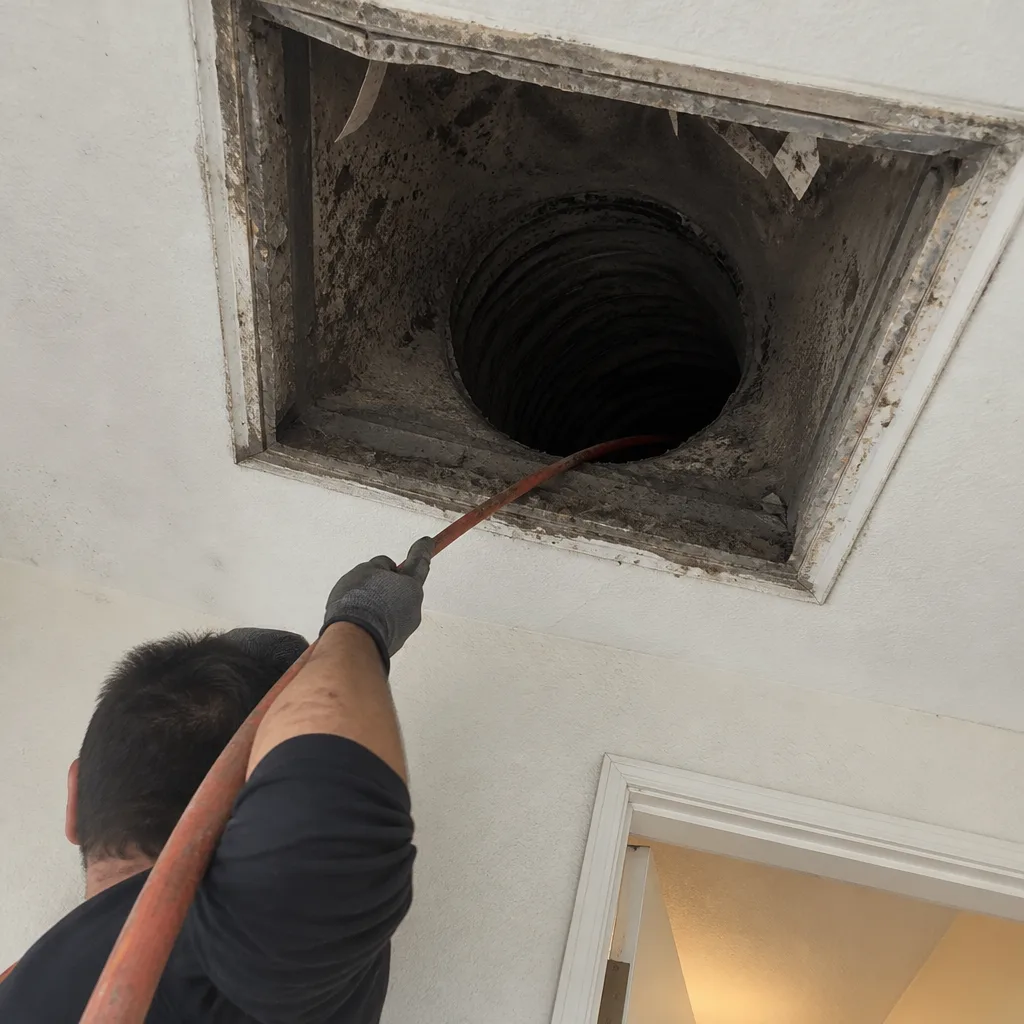
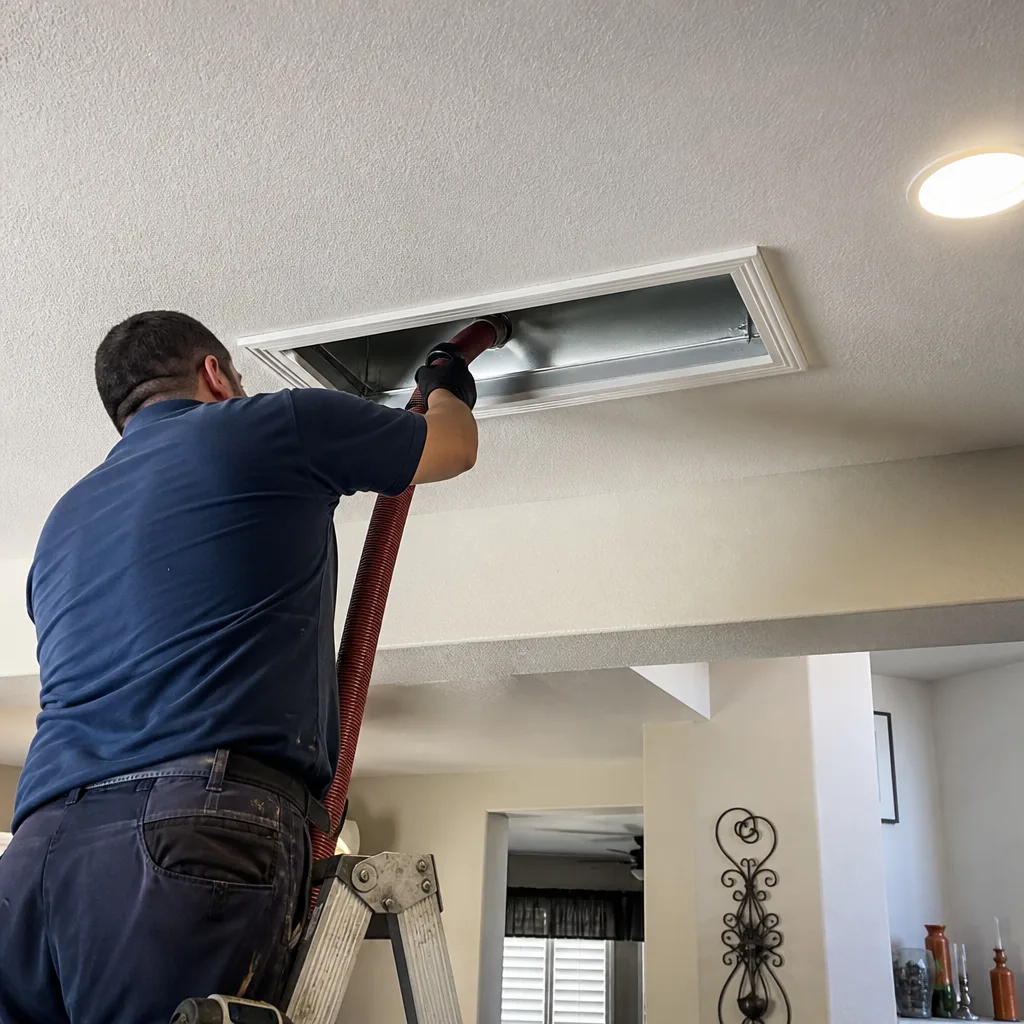
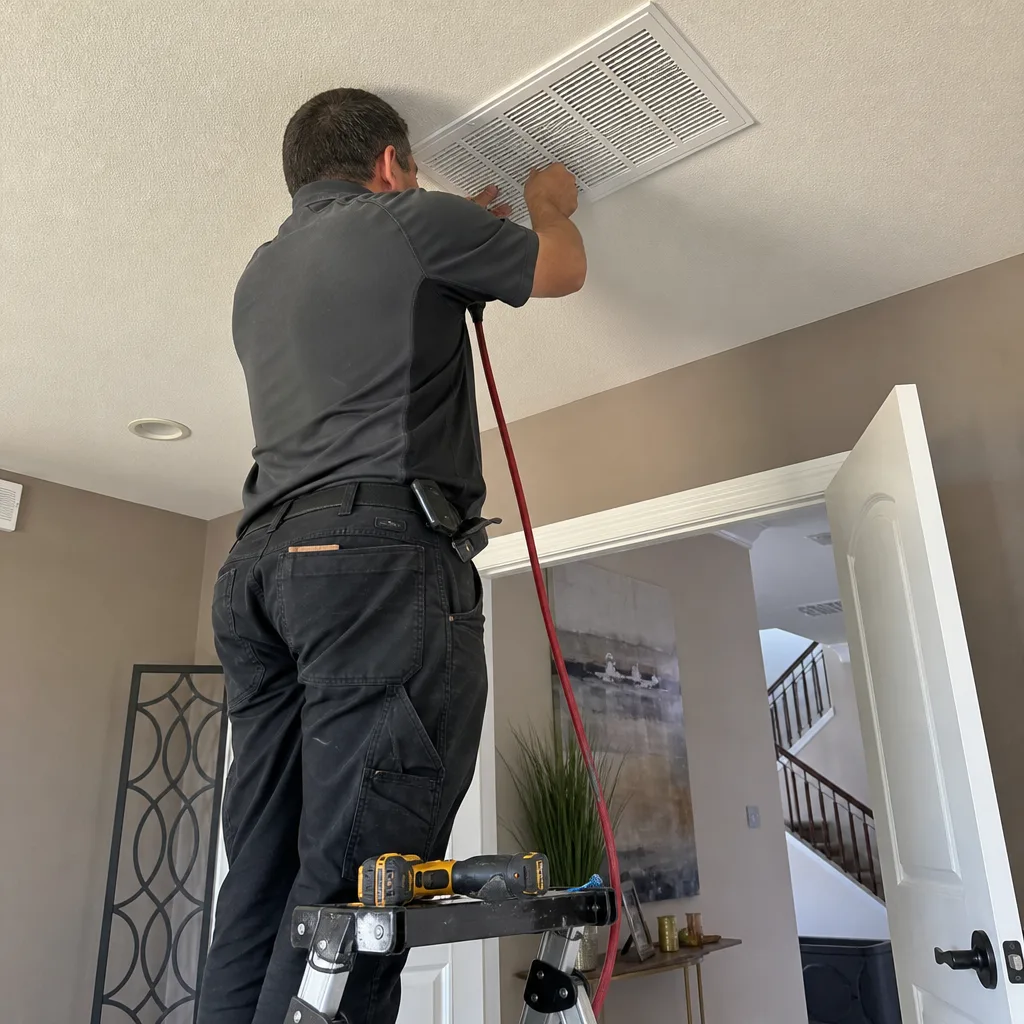
Whole-system duct and dryer vent check with before-and-after photos - you see exactly what came out of your vents
That "$99 whole-house special" is a bait ad - the real number appears once they are in your hallway, or the "clean" is a shop-vac at the register. We photograph the inside of your ducts before and after instead.
Air Duct Cleaning Warning Signs: A Henderson Homeowner’s Reference Guide
Here’s something most Henderson homeowners don’t realize: the first real warning sign of a duct problem isn’t visible at the register. It’s that one room in the house that never quite cools down in July, even when the thermostat says it should. You check the vent, feel air coming out, and assume everything’s fine. But the airflow is weaker than it was two summers ago, and you’ve just learned to avoid that room after 3 p.m. This guide covers what to notice before it becomes obvious, because in a desert climate like Henderson’s, catching duct issues early is the difference between a routine cleaning and an expensive repair.
Styles & brands we work with
Quick Answer
The earliest warning signs of duct problems in Henderson homes are subtle: uneven cooling between rooms, dust patterns that reappear within days of cleaning, a faint musty smell when the AC first kicks on, and dryer cycles that keep getting longer. None of these scream “emergency,” but together they indicate your duct system is working harder than it should. In Henderson’s dry, dusty climate, these early signals typically point to internal buildup, small leaks, or partial blockages that a professional inspection can confirm quickly. A full our Air Duct Cleaning services in Henderson generally runs $250 to $600 for a typical single-system home, depending on home size and system condition.
Table of Contents
- Airflow Imbalance: The Room That Never Cools Down
- Register Dust: Normal Desert Dust vs. Internal Buildup
- Pet Households: What to Watch on Return Air Grilles
- The Musty Smell Question: Ducts vs. Coils
- Dryer Vent Warning Signs Specific to Henderson
- Older Henderson Builds: Duct Collapse and Hidden Blockages
- Common Mistakes to Avoid
- When to Call a Professional
- Frequently Asked Questions
- The Bottom Line
Airflow Imbalance: The Room That Never Cools Down
This is the warning sign we hear about most often from Henderson homeowners, and it’s also the one most people dismiss for years. One bedroom stays comfortable. Another one, usually the one farthest from the air handler or on the west side of the house, never quite gets there. You close the door, turn on a ceiling fan, and live with it. But airflow imbalance is often the earliest physical evidence that something is changing inside your ducts.
Duct systems are designed to deliver a calculated amount of air to each room based on its size, window area, and heat load. When that balance shifts, something has changed. In Henderson, the most common causes are these:
- Internal dust and debris buildup narrowing the effective diameter of branch ducts over time
- Loose or disconnected duct joints that leak conditioned air into the attic
- Partially collapsed flex ducts pinched during construction or crushed by stored items
- Closed or obstructed dampers that someone adjusted years ago and never reopened
Here’s the Henderson-specific detail that matters: our attics routinely hit 140°F in July. A duct leaking even 10% of its air into that attic space isn’t a small inefficiency. It’s a meaningful loss of cooling capacity, and it forces your AC to run longer to compensate. You notice it first as a warm room. Your electric bill notices it as a steady climb.
The simple test: on a hot afternoon, walk through your house and hold your hand in front of each register, one after another. Compare the airflow. If one room feels noticeably weaker than the others, that’s worth investigating. Duct cleaning removes the internal buildup that narrows airflow. A professional inspection can also identify leaks and collapsed sections while the system is open.
If you’d like us to take a look, Morton’s Air Duct Cleaning in Henderson includes an airflow check as part of every estimate.
Register Dust: Normal Desert Dust vs. Internal Buildup
Every Henderson home has dust. That’s just the reality of living in the Mojave. But there’s a difference between the normal fine dust that settles on furniture and the specific pattern of dust that indicates internal duct buildup. Learning to read that pattern tells you whether you’re dealing with ordinary housekeeping or a duct system that needs attention.
Normal desert dust settles evenly on horizontal surfaces. It’s fine, light gray, and spreads across shelves, tables, and window sills at roughly the same rate. It comes from outside: open doors, open windows, shoes, pets, and the fine particulate that finds its way through every small gap in a home’s envelope. It doesn’t concentrate around registers.
Duct-related dust behaves differently. Here’s what to look for:
- Dark or gray streaks radiating outward from a register on the wall or ceiling
- Visible dust or debris clinging to the register grille itself, especially on the backside of the slats
- Dust that reappears within 2 to 3 days after a thorough cleaning of the room
- Small clumps or lint-like particles on surfaces near the register, not just fine powder
Those streaks matter. They form because air moving through a dirty duct picks up particles and carries them out through the register, where they deposit on the wall or ceiling in a directional pattern. Fine dust settling from still air doesn’t create streaks. Air movement does.
Here’s the part worth understanding: when buildup inside the duct reaches a certain point, the system effectively becomes a dust distribution network. Every cooling cycle pushes accumulated particles into your living space. Regular dusting helps the rooms, but it doesn’t address the source. If you’re dusting more than once a week and still seeing gray film on furniture, that’s a signal worth paying attention to.
Cleaning your ducts removes that internal reservoir. We use Rotobrush and Nikro equipment to do it, because these systems are designed to agitate and extract buildup from the full interior of the duct, not just the first few feet near the register. You can read more about how the process works on our Mortons Air Duct Henderson home page.
Pet Households: What to Watch on Return Air Grilles
Henderson is a pet town. Dogs, cats, and increasingly, indoor rabbits and birds. If you share your home with animals, your duct system is working under a different load than a pet-free household. The return air grille is the best early warning indicator, and most pet owners never look at it closely.
Here’s the setup: return grilles pull air back to the air handler. That air carries everything suspended in your home’s atmosphere, including pet dander and hair. Over time, that material collects on the return grille and on the return side of the system. The grille itself is the visible part of that process.
What to check on your return grilles:
- Hair and dander forming a mat on the grille surface. A thin film is normal in a pet home. A dense mat that blocks airflow is not.
- Gray, greasy residue on the grille and surrounding wall. Pet dander carries oils that make this residue stickier than ordinary dust.
- Reduced suction at the return. Hold a tissue near the grille. In a healthy system it should be pulled against the grille. If it barely flutters, airflow is restricted.
- Pet odors that linger after cleaning. Dander in the duct system recirculates every cycle, so the smell returns quickly even after you’ve washed bedding and vacuumed.
In our experience, pet households in Henderson benefit from duct cleaning more frequently than pet-free homes, often every 2 to 3 years instead of every 3 to 5. That’s not a sales pitch, it’s physics: more material in the air means more material in the ducts. Pet hair, dander, and the fine dust pets track in from outside all accumulate faster.
We’re a pet-friendly company. Our technicians work around pets carefully, and we use product choices that are pet-safe where available. If your return grilles show any of the signs above, that’s a good reason to have the system evaluated.
The Musty Smell Question: Ducts vs. Coils
A musty smell when the AC kicks on is one of the most common complaints we hear from Henderson homeowners. It’s also one of the most misunderstood. The smell can come from two different sources, and treating the wrong one won’t fix the problem. Understanding the distinction before you call anyone saves you time and money.
Coil-related odor: The evaporator coil sits inside the air handler. In Henderson’s cooling season, it runs cold and wet. Over time, dust and organic matter collect on the coil surface and, combined with moisture, create an environment where mold and bacteria can grow. The result is a musty or sour smell that’s strongest in the first few seconds after the AC starts, then fades as the coil re-chills. This is a coil issue, not a duct issue, and the fix involves cleaning the coil and the condensate pan.
Duct-related odor: If the odor is coming from inside the ductwork, it typically persists longer after startup and may be more noticeable in specific rooms than others. Duct-related mustiness in Henderson often traces back to a few specific causes: dust that has absorbed moisture during the humid monsoon weeks and never fully dried, pest activity in the duct system, or a small leak that’s been pulling in attic air and whatever comes with it. A dead rodent in a duct produces an unmistakable odor. So does a family of pack rats that moved into the attic and found an opening in a flex duct.
Here’s the useful distinction table:
- Smell strongest right at startup, fades within 30 seconds: likely coil-related
- Smell persists for minutes, may concentrate in certain rooms: likely duct-related
- Smell constant, even when the system is off: could be either, plus possibly moisture in the drain pan or mold in the duct lining
- Smell is sour, musty, or like dirty socks: often bacterial growth on the coil
- Smell is earthy, stale, or like an old attic: often duct-related
Why does the distinction matter before you call? Because duct cleaning addresses the ducts. Coil cleaning addresses the coil. A reputable company will tell you which one you actually need. We always do, and our air duct cleaning process in Henderson includes inspecting the coil area when the system is open. If the problem is the coil and not the ducts, we’ll tell you.
Dryer Vent Warning Signs Specific to Henderson
Dryer vents are part of the same exhaust ecosystem as your ducts, and Henderson homes have a few specific risk factors. The warning signs here are easy to check yourself, and the consequences of ignoring them are serious. A clogged dryer vent is a fire hazard, full stop. The US Fire Administration attributes thousands of residential fires each year to dryer vent failures, and most are preventable.
Here are the signs to watch for in Henderson:
- Dryer cycles getting longer. If a load that used to dry in 45 minutes now takes 70 or 80, the vent is not exhausting properly. Lint is building up somewhere in the line.
- The exterior vent flap barely opens. When the dryer runs, that flap should swing open and stay open. If it barely moves, the exhaust pressure is too low, which means blockage upstream.
- Lint accumulation around the dryer itself. Some lint in the lint trap is normal. Lint behind the dryer, on the wall, or around the floor near the vent connection means the system is leaking or backing up.
- The laundry room heats up while the dryer runs. A properly vented dryer exhausts hot, moist air outside. If that heat stays in the room, the exhaust path is compromised.
Henderson adds a specific variable here: many homes have dryer vents that run through the attic or along exterior walls where desert heat bakes the vent line. That heat can cause lint to adhere to the vent interior more stubbornly than it would in a cooler climate. Flexible foil or plastic vent lines, still common in older Henderson homes, are especially prone to sagging and trapping lint in low spots. Modern building codes call for rigid metal ducting for this exact reason.
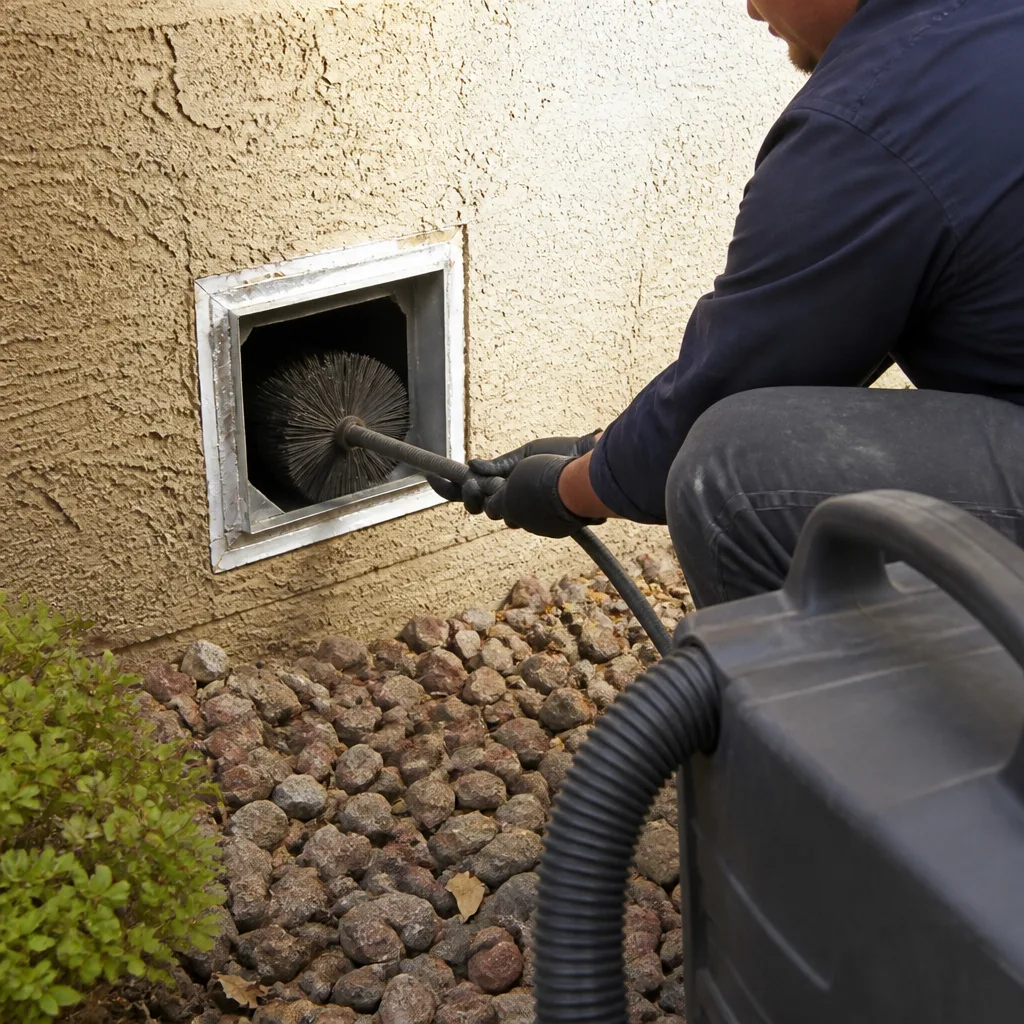
Lint traps catch maybe 70% of the lint a dryer produces. The rest goes into the vent. Over two or three years in a busy family household, that’s enough to create a significant restriction. We recommend checking the exterior vent flap every time you clean the lint trap. It takes five seconds. It’s the cheapest early warning system you own. For more on this, see our dryer vent cleaning service for Henderson homes.
Older Henderson Builds: Duct Collapse and Hidden Blockages
Henderson’s building boom started in the 1990s and accelerated through the 2000s. That means a large share of the city’s housing stock is now 20 to 35 years old. Duct systems from that era are reaching the age where specific failure modes become common. If your home was built before about 2010, this section is for you.
The most frequent issues we find in older Henderson homes:
- Flex duct sag and collapse. The flexible insulated ducts used in many 90s and 2000s builds have a plastic inner liner supported by a wire coil. Over two decades in a Henderson attic, the plastic becomes brittle. The wire coil can separate from the liner. The duct sags between supports and partially collapses, strangling airflow to one or more rooms.
- Disconnected joints. Duct sections are joined with tape and mastic. Attic heat cycles break down the adhesive over time. Joints separate. Air that should go to a bedroom pours into the attic instead.
- Drywall debris and construction material. In many homes, duct installation happened before drywall was finished. The registers were not sealed during construction. The result: chunks of drywall, paint chips, and construction debris inside the ducts from day one. If no one ever cleaned them, it’s still there.
- Pest entry points. A disconnected joint or a torn flex duct in the attic is an open invitation. Rodents, insects, and the debris they leave behind find their way into the system. Henderson’s pack rat population makes this more than a theoretical risk.
The warning sign that ties these together is usually the same: a room or zone that never cools properly, paired with higher cooling bills than the house needed a few years ago. If the issue is a collapsed duct or a separated joint, duct cleaning alone won’t fix it, but a professional inspection will find it. For context, see our DIY vs Professional Air Duct Cleaning: The Henderson Homeowner’s Decision Guide. In our experience, roughly one in five older Henderson homes we inspect has some degree of duct damage that would have been invisible without opening the system.
Common Mistakes to Avoid
- Closing registers in unused rooms to save energy. This doesn’t save energy in a modern forced-air system. It increases static pressure, forces air through the remaining registers faster, and can push more dust into living areas. In older Henderson homes, the added pressure can also find its way out through small leaks that were previously insignificant.
- Using standard fiberglass furnace filters in a pet household. Cheap filters catch large particles and let everything else through. All that pet dander and fine dust ends up in the ductwork and on the coil. A mid-range pleated filter, checked monthly during cooling season, is a better choice for most Henderson homes.
- Ignoring the exterior dryer vent because it’s on a second story or the roof. Many Henderson homes have roof-terminating dryer vents. They’re easy to forget, but they clog just like wall vents. You can often see lint accumulation at the roof cap from the ground, especially in the morning light.
- Assuming a new air filter means a clean duct system. The filter protects the air handler and coil, not the ducts. Dust that passes through the filter can settle in the duct system and accumulate over time. A new filter improves air quality at the source, but it doesn’t clean the network.
- Waiting until a visible problem to address airflow imbalance. By the time a room is truly uncomfortable, the restriction has usually been building for a year or more. Addressing it early means a cleaning rather than a repair.
- Choosing a duct cleaning company by price alone. Henderson has a wide range of providers, and prices vary by hundreds of dollars. Some cheap services connect a vacuum to one register and call it done. Ask what equipment they use, how long the job takes, and what they’ll show you afterward. A quality provider can answer all three questions clearly.
When to Call a Professional
Most of the warning signs in this guide can be checked by a homeowner in under ten minutes. But once you’ve identified signals, the next step is usually a professional evaluation. Specifically, call if you notice persistent airflow imbalance between rooms, dust streaking around registers that reappears quickly after cleaning, a musty smell that’s stronger in some rooms than others, return grilles densely matted with pet hair, dryer cycles that have grown noticeably longer, or any of the older-build risk factors described above.
Mortons Air Duct Henderson offers free estimates throughout Henderson, Green Valley, Anthem, Seven Hills, Inspirada, and the Lake Las Vegas area. We’ll inspect the system, tell you what we found, and give you a written price before any work starts. Call us at (775) 252-8615.
Frequently Asked Questions
Air duct cleaning in Henderson typically costs between $250 and $600 for a single-system home, depending on square footage, the number of vents, and how much buildup has accumulated. Larger homes or systems with significant pet hair or construction debris can run higher. Morton’s provides a written price before any work begins, so you know the exact cost before you decide. Call (775) 252-8615 for a free estimate.
Low-price duct cleaning offers typically come from companies that spend 30 to 60 minutes on the job, often using a single vacuum attached to one register opening. They may not clean the full duct length, the return side, or the air handler plenum. A thorough cleaning of a typical Henderson home takes 3 to 5 hours with professional equipment. The lower price reflects the lower level of service, and in some cases, the work provides little lasting benefit. We recommend asking any company how long the job takes and what equipment they use.
Ask for before-and-after photos. A reputable company photographs the duct interior before and after cleaning, and the difference should be obvious in the images. Morton’s includes a photo of the clean-up before our crew leaves, so you can see the condition of your ducts and confirm the work was completed properly.
Most Henderson homes benefit from duct cleaning every 3 to 5 years. Homes with multiple pets or family members with allergies may benefit from every 2 to 3 years. Homes that have recently undergone renovation or that had construction debris in the system from the original build should be cleaned once, thoroughly, and then reassessed.
Yes, when done properly. The process involves a vacuum system that creates negative pressure in the ductwork, meaning dust and debris are pulled into the collection system rather than pushed into the living space. Morton’s technicians wear shoe covers, place drop cloths around the work area, and use pet-safe product choices where available. You can be home during the entire clean.
Yes, partially. You can remove a register cover and look into the duct with a flashlight. In many Henderson homes, you’ll see dust, debris, or construction material within the first few feet. However, a visual check at the register only shows you a small portion of the system. The return side, the air handler plenum, and the branch ducts deeper in the attic are not visible from there. A professional inspection with camera equipment covers the full system.
The Bottom Line
Henderson homes face a specific set of duct challenges: fine desert dust, 140-degree attics, aging flex duct from the building boom years, and pet dander from the city’s many four-legged residents. The early warnings are subtle: a warm room, dust streaks around a register, a return grille matted with hair, a dryer that takes longer every month. None of these will set off alarms on their own, but together they form a clear picture. The fix, in most cases, starts with a professional inspection and a thorough duct cleaning. For a deeper dive, read The Complete Guide to Air Duct Cleaning in Henderson. If you’ve noticed any of the signs in this guide, call Morton’s Air Duct Henderson at (775) 252-8615. We’ll give you an honest assessment and a written price. No pressure, no surprises, no upsells. Just a clear picture of what’s happening in your ducts and what we recommend doing about it.
Written by Paul Adeyemi, Owner at Mortons Air Duct Henderson, serving Henderson since 2005. Explore more guides & resources on our blog.
See the difference
 Before
 After
After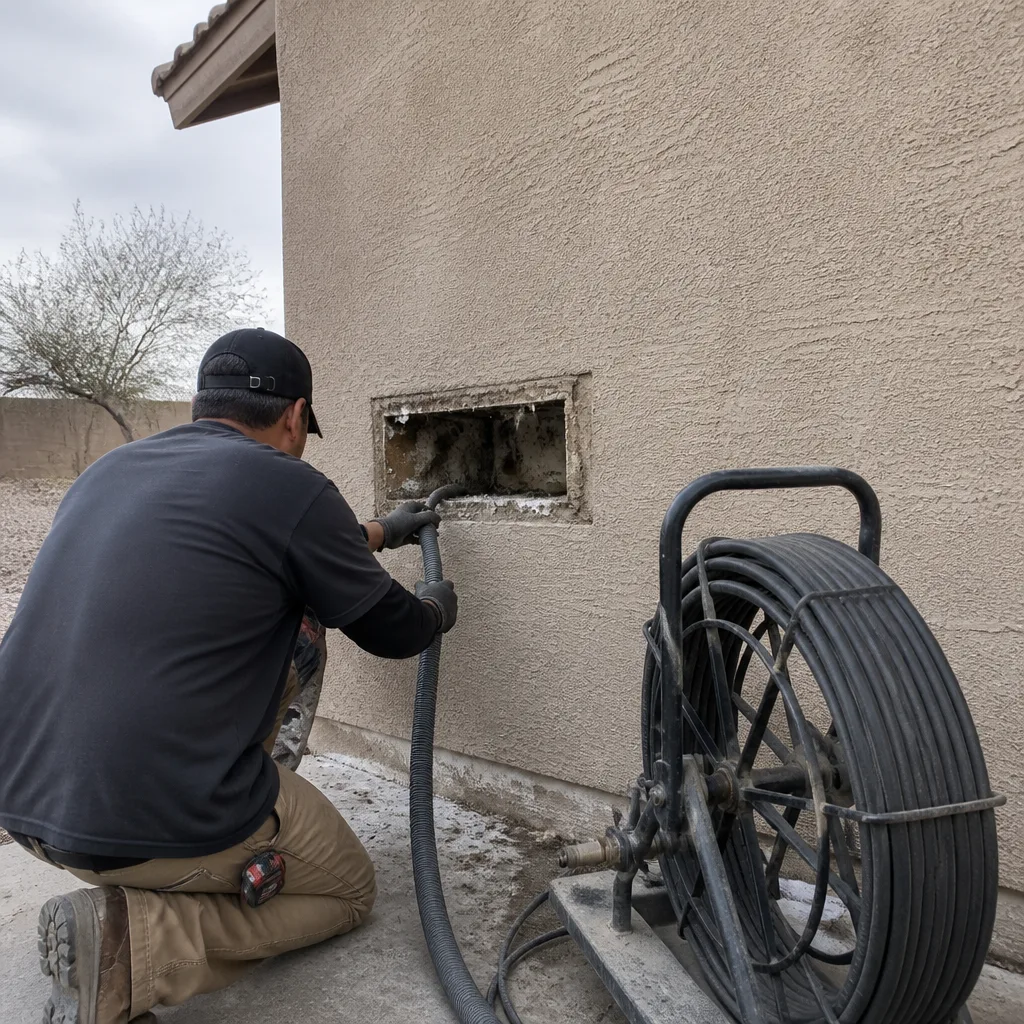 Before
 After
After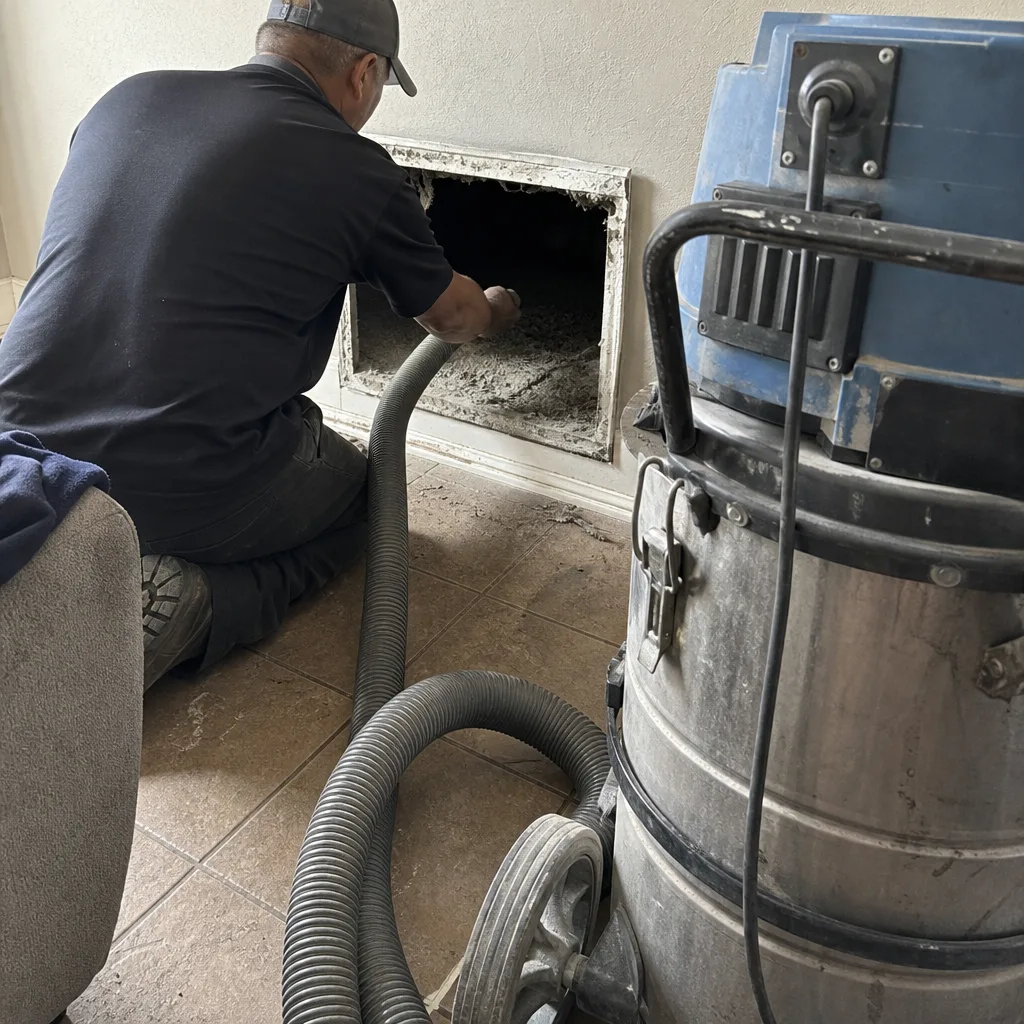 Before
 After
After